

Glass or silicone screen protector? What each one does better
Glass absorbs impacts, silicone sticks even to a curved screen, and a privacy protector hides the screen from the sides at the cost of some brightness. Here is how to choose.
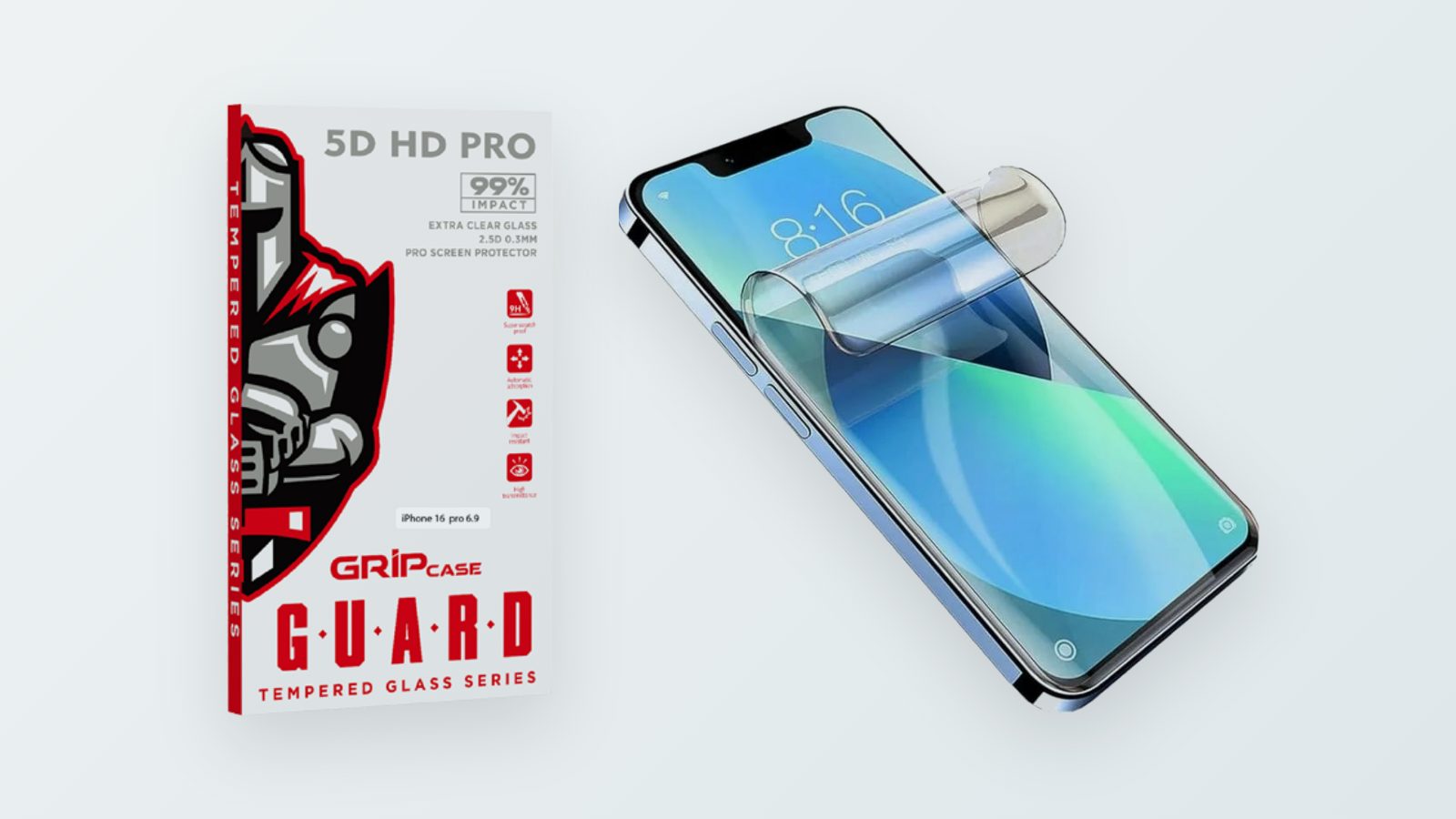
Almost everyone buying a new phone asks the same question: a glass or a silicone screen protector? The answer depends on three things: the shape of the screen, whether you want the corners covered too, and whether you want the person next to you not to read your screen.
What is the difference between glass and silicone
A glass protector is made of rigid tempered glass. When the phone falls face down, the protector absorbs the impact and cracks instead of the screen, and you only replace the protector. A silicone protector, also called hydrogel or TPU, is a thin flexible layer. It does not crack, but it absorbs less of the impact and scratches faster.
You can see the difference in the hardness printed on the box. Our glass protectors are 9H, and the silicone protector is 5H. The higher the number, the more scratch-resistant the protector.
When silicone is the better choice
There are two cases. First: a screen that curves at the sides. Flat glass does not fully stick to a curved edge, while flexible silicone does. Second: a model with no ready-made glass protector. We cut the silicone protector by machine to the exact model, so it fits any phone.
Standard or full-cover protector
The glass protector comes in two versions. The standard protector covers only the display area, leaving the corners and the black frame exposed. The full-cover protector covers the whole front, corners included. If the phone lands on a corner, with the standard protector the impact goes straight to the screen.
Privacy (tinted) protector: what you get and what you give up
A privacy protector has a layer of tiny strips that works like a blind. Looking straight at the screen you see everything; looking from the side you see a dark screen. There is a price: the screen looks slightly darker from the front too, and sometimes you need to raise the brightness. On most protectors the hiding only works to the sides, and when you turn the phone sideways it barely works. We offer a Privacy version of both the full-cover glass and the silicone protector.
Samsung with an in-screen fingerprint sensor
On Samsung models where the fingerprint sensor sits under the screen, Samsung recommends registering your fingerprint again after applying a new protector, because the protector changes what the sensor reads.
In short: for a flat screen and drop protection, full-cover glass. For a curved screen or a rare model, silicone. And if you don't want people peeking at your screen, the Privacy version.
- glass or silicone screen protector
- privacy screen protector
- hydrogel screen protector
- tinted screen protector