

Open-ear headphones: what they are and how they differ from bone conduction
Headphones that don't go into your ear: how they work, how they differ from bone conduction, clip or ear hook, who else hears your music, and why they don't belong in the pool.
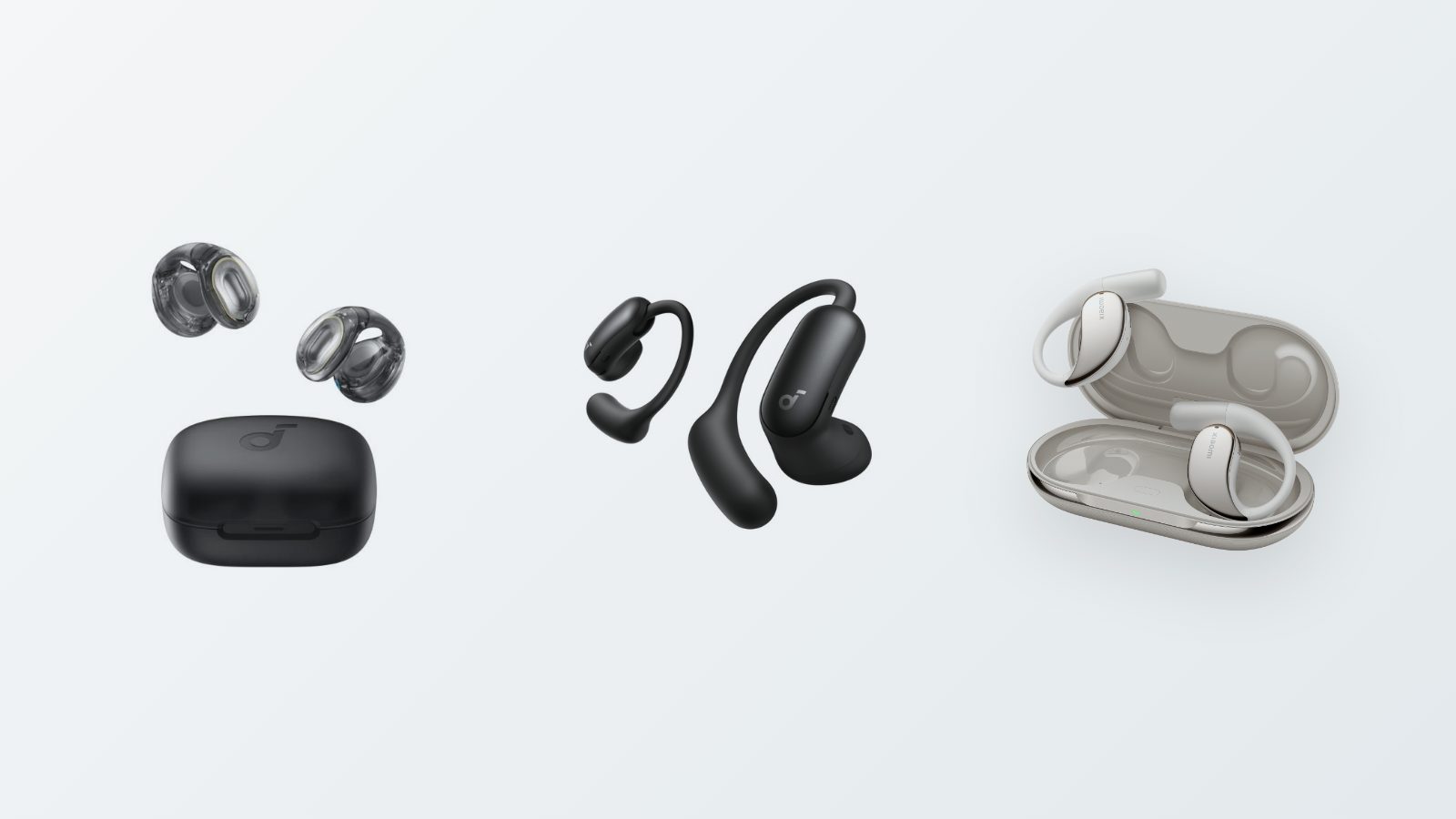
Open-ear headphones don't go inside your ear. A small speaker sits next to the opening of the ear canal and points the sound inward through the air, while your ear stays open to the street, the teacher in class or a car coming up behind you. You hear your music without cutting yourself off from what's around you.
How are they different from bone conduction headphones?
Bone conduction headphones don't play sound into the air. They vibrate your cheekbone, and the vibration reaches the inner ear without passing through the ear canal. Your ear stays open with them too, but the manufacturers themselves and review sites agree that the bass is weaker, and that the feeling of vibration takes some getting used to. With open-ear headphones the sound is ordinary sound; it simply arrives from outside.
Clip or ear hook?
There are two shapes. Clip-on earbuds, like the soundcore C50i, grip the edge of the ear like an earring. According to the importer they weigh under 6 g per earbud, and some models come with fit adapters in two sizes. Earbuds with an ear hook hang behind the ear and weigh about 10 g. The hook keeps them in place when you run and jump, and on models like the V20i it can be adjusted to several positions.
Can people next to you hear your music?
At high volume, yes. Someone standing right next to you in a lift or a quiet office will hear something, because the sound isn't sealed inside your ear. Some models try to reduce this: the Xiaomi OpenWear Stereo has an extra 10 mm speaker that sends an inverted sound wave outward to cancel the leak. That reduces the problem; it doesn't make it disappear.
On a noisy bus it won't be enough
Open headphones don't block noise, so on a train or a bus you turn the volume up to hear. If you travel a lot and want one pair for both workouts and commuting, you can choose a hybrid model. On the soundcore AeroFit 2 Pro you rotate the hook, the earbud moves slightly into the ear and noise cancelling switches on. According to the importer, the battery lasts 7 hours in open mode and 5 hours with noise cancelling.
Can you swim with them?
No. The models in our catalogue are rated IPX4 or IP55, which means sweat, rain and splashes, not immersion in water. The difference between the two ratings is mainly dust resistance. The importer also states that water damage is not covered by the warranty. For the pool there are dedicated bone conduction headphones with built-in storage for music, because Bluetooth doesn't travel well through water.
They suit people who run or cycle outdoors, people at work who want to hear when someone talks to them, and anyone whose regular earbuds start to hurt after an hour. If you want complete quiet, you need regular earbuds with noise cancelling.
- open ear headphones
- bone conduction headphones
- headphones that don't go in your ear
- running headphones