

Kosher Phone, Filtered Smartphone or Network Filtering: How to Choose
"Kosher" is not a single standard. Three levels of filtering, and how to find out which one is required of you before you buy.
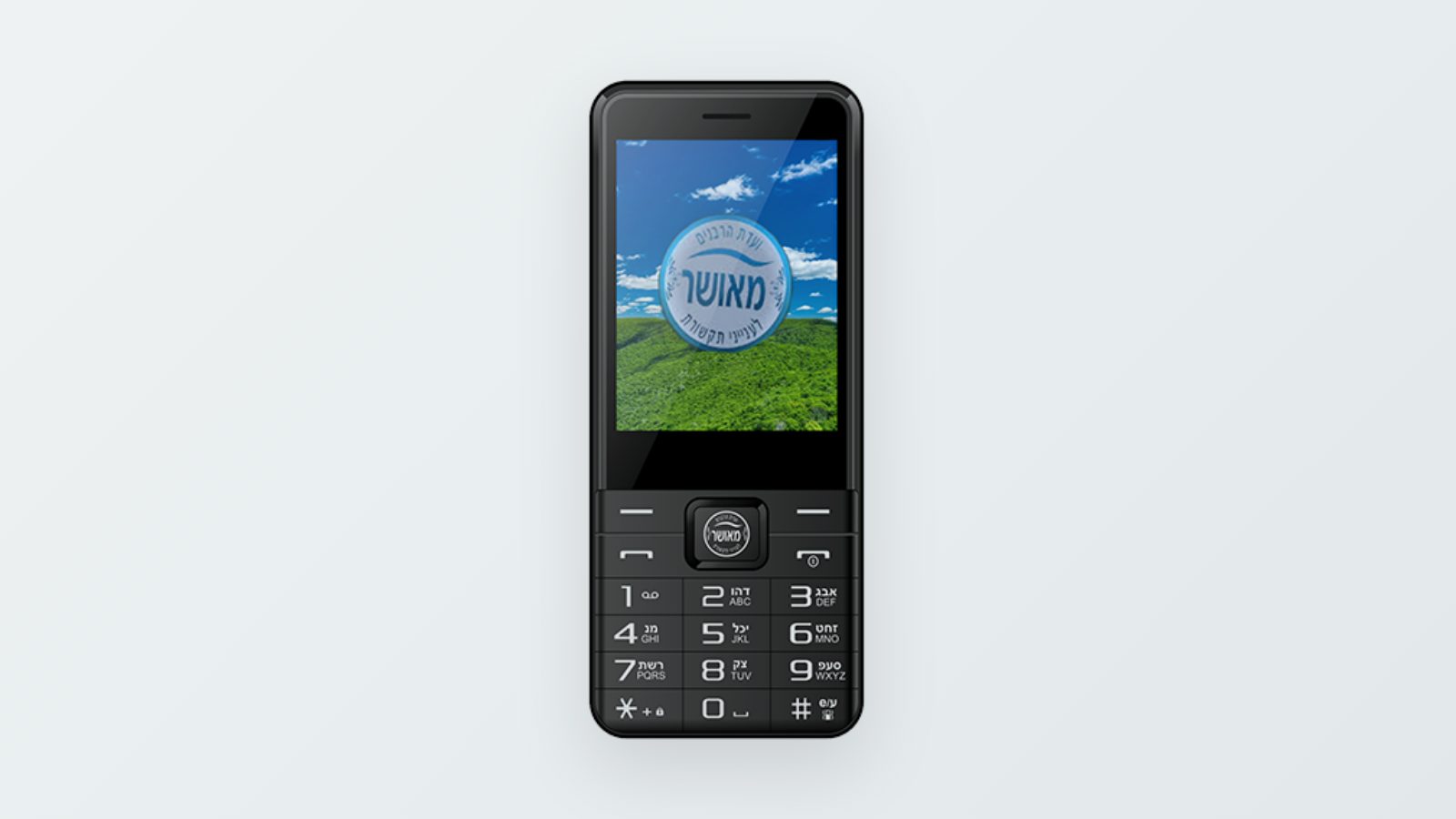
When you look for a kosher phone (meaning a device that meets the filtering requirements of Israel's religious communities), you quickly discover that "kosher" isn't a single standard. There's the closed device for calls only, there's the kosher smartphone with filtering, and there's filtering done at the carrier. The differences between them are big, and buying at the wrong level usually ends in replacing the device.
Closed kosher phone: calls, and sometimes messages
A simple keypad device, with no browser and no app store, and usually no camera. The number gets a prefix that's identified as kosher. It suits someone who needs a phone for calls only, and someone whose institution or community requires an identified kosher number.
Kosher smartphone with filtering software
This is an ordinary smartphone with software installed that blocks content and determines which apps can be installed. The filtering is managed remotely, and the user can't remove it on their own. Will a kosher phone have WhatsApp, Waze or a banking app? That depends on the filtering company and the plan you chose, not on the device. It's the option for someone who needs navigation and work apps but wants clear boundaries.
Phone filtering at the network level
Here the filtering is done at the carrier, and the device itself stays ordinary. The advantage is that there's no software that could break in an update. The drawback is that the filtering applies only when the device browses through that carrier's mobile network.
Which level is required of you, and by whom
Most mistakes happen at this stage. An educational institution usually requires a number with an identified kosher prefix, and a filtered smartphone doesn't necessarily meet the requirement, even if its filtering is stricter. A workplace is usually satisfied with content filtering. When it's a family decision, the question is what will actually help you, not what's approved.
One phone call to the institution, before you buy, saves you from replacing the device.
Kosher phone for kids: no need for a powerful device
If the device will be filtered anyway, a large part of the capabilities you pay for won't be used. An advanced camera and a powerful processor matter less when there are no games and no video editing. A big battery and a readable screen will be felt every day, so a mid-range device is usually the better choice. The simple kosher devices in stock, like the Normande N1 and Nokia models, are in the other brands category.
Four questions before you buy
- Who manages the filtering, and what do you do when a setting needs to change?
- Can apps for your bank, health fund (kupat holim), parking and payments be approved, and how long does it take?
- What happens to the filtering after a major system update, and who handles it if it breaks?
- Does the device stay under warranty after the filtering is installed? Ask for the answer in writing.
And it's worth discussing the decision with the people it affects, your spouse or the child who will receive the device, before you buy and not after.
- Kosher phone
- Kosher smartphone
- Phone filtering
- Kosher phone for kids